More Than a Masjid: Inside the American Islamic Centers Becoming Engines of Community Power
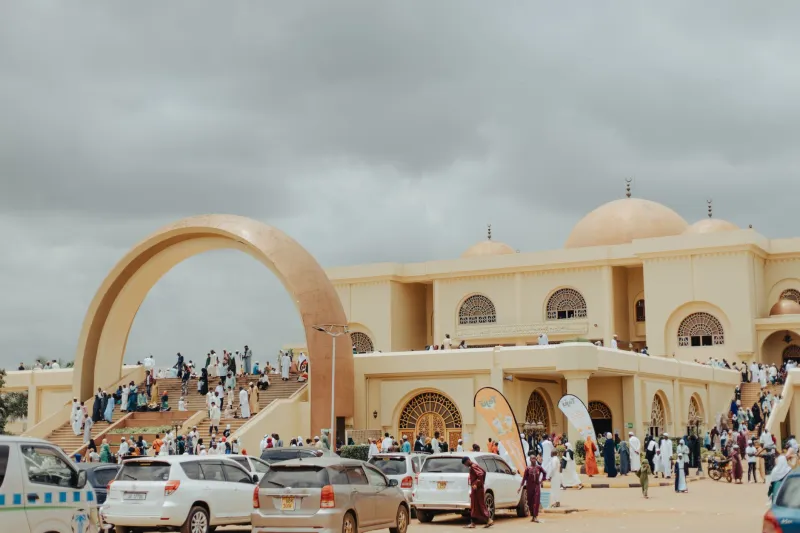
On a Tuesday evening in late October, the parking lot of the Islamic Center of Greater Kansas City is more full than it would be on most Fridays. Inside, past the prayer hall and through a set of double doors, about sixty people are seated in folding chairs — some in hijab, some not, some clearly not Muslim at all. A facilitator at the front is walking through the mechanics of absentee ballot applications.
This is not a religious service. It is, however, unmistakably a community institution doing what community institutions have always done at their best: showing people that their participation matters.
"The masjid has always been more than a place to pray," says Imam Dawud Hassan, who has led the center for eleven years. "In the time of the Prophet, peace be upon him, the mosque was where you settled disputes, where you organized relief for the poor, where you welcomed strangers. We're not doing something new. We're recovering something old."
The Third Space Problem
Urban planners and sociologists have a concept called the "third space" — somewhere that's neither home nor work, where community life actually happens. For many Americans, that used to be churches, union halls, or neighborhood associations. As those institutions have declined, the question of where community cohesion gets built has become urgent.
For American Muslims, the answer is increasingly: the masjid.
But not the masjid of twenty years ago, which in many communities functioned primarily as a place for Friday prayer and weekend Arabic school. The mosques and Islamic centers that are generating the most energy right now have expanded their understanding of what a religious institution is supposed to do.
At the Islamic Society of Boston Cultural Center — one of the largest mosques in New England — programming includes financial literacy workshops, a legal aid clinic, mental health resources, and an annual interfaith Thanksgiving dinner that draws hundreds of non-Muslim neighbors. The center's executive director describes their model as "meeting people where their lives actually are."
"People don't separate their spiritual needs from their practical needs," she says. "If someone is worried about their immigration status, that's a spiritual burden. If someone can't afford a lawyer, that's a justice issue. We're not stepping outside our lane — we're recognizing how wide the lane actually is."
Voter Registration as Religious Practice
One of the most visible ways Islamic centers have expanded their civic footprint is through voter engagement — an area that has historically been complicated for American Muslim communities.
Post-9/11 surveillance, profiling, and a generalized sense of political vulnerability led many Muslims to disengage from electoral politics. Why register to vote when you're not sure the system sees you as a full citizen? That calculation has shifted dramatically, particularly among younger American Muslims who have grown up with both the benefits and the burdens of full civic membership.
Organizations like Emgage Action and MPAC have partnered with mosques in swing states — Michigan, Pennsylvania, Georgia, Arizona — to run registration drives after Friday prayers, conduct candidate forums, and mobilize turnout. The results have been measurable. In several 2022 midterm races, Muslim American voter turnout in targeted precincts outperformed broader demographic trends.
"When you register someone to vote inside a mosque, you're connecting their civic identity to their spiritual identity," says a community organizer who has run registration drives in mosques across the Southeast. "That's a powerful connection. It says: this is part of who you are as a Muslim American."
Interfaith as Strategy, Not Sentiment
Some of the most politically sophisticated work happening in American Islamic centers isn't internal — it's relational. Across the country, mosques are building sustained partnerships with churches, synagogues, and other faith communities in ways that go beyond the symbolic open house.
In Atlanta, a coalition of mosques and Black Baptist churches has organized jointly around criminal justice reform, combining congregational networks to turn out at city council hearings and meet with the district attorney's office. In Minneapolis, an Islamic center and a Lutheran church share a food pantry that serves the broader neighborhood, regardless of faith background.
These partnerships are strategic. They build political relationships across religious lines. They demonstrate that Muslim Americans are not a community apart but a community embedded in the broader American fabric.
"Interfaith isn't just about feeling good," says one imam in the Atlanta coalition. "It's about power. When I walk into a meeting with the mayor and I've got the pastor of a five-thousand-member church next to me, I have more power than I do alone. That's not cynical — that's how civic life works."
The Youth Question
Perhaps the most consequential investment these centers are making is in their young people. Youth programming has evolved far beyond Quran memorization competitions. Islamic centers are now running debate teams, entrepreneurship incubators, mental health support groups, and social justice fellowships that train young Muslims to be effective advocates.
At a mosque in suburban New Jersey, a cohort of high schoolers recently completed a semester-long program on local government — attending planning board meetings, interviewing their state assembly representative, and developing a policy proposal on housing affordability. The program is run entirely by volunteers, most of them professionals from the congregation.
"We want young people to understand that they have a right to be in these rooms," says the program's coordinator. "Not just as Muslims, but as Americans. The masjid is where they learn that."
What This Moment Means
It would be easy to romanticize all of this — to flatten the complexity of American Muslim communities into a single inspiring narrative. The reality is messier. Not every mosque has the resources or the leadership vision to operate this way. Internal debates about the proper role of religious institutions in political life are real and ongoing. And the external pressures on Muslim communities — from Islamophobia to immigration enforcement to global conflicts that land emotionally at home — are not going away.
But something is clearly shifting. The mosques and Islamic centers that are thriving right now are the ones that have decided their responsibility extends beyond the prayer rug. They're becoming, in the truest sense, institutions that hold community life together.
"People used to ask me: why does a mosque need to do all this?" says Imam Hassan in Kansas City, as volunteers begin stacking chairs after the voter registration event winds down. "Now they ask me: where else would this happen?"
He doesn't have a good answer to that. Neither does anyone else.