Dabke Before the First Dance: The New Rules of the Arab American Wedding
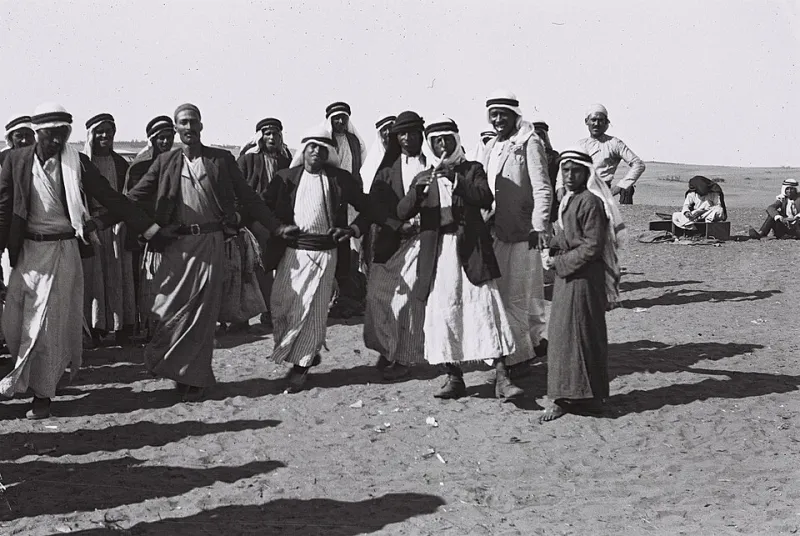
Photo: Zoltan Kluger, Public domain, via Wikimedia Commons
The ballroom at the Marriott in Dearborn was booked for months. It didn't matter. Lina Haddad and Samir Odeh were getting married the way their families actually celebrate — which meant the hotel would host exactly one of four events spread across a single, glorious week.
"The planner kept asking, 'So the reception is the wedding?'" Lina laughs. "We had to explain there are like four weddings. She just stared at us."
Welcome to the new arithmetic of the Arab American wedding, where the traditional American template — ceremony, cocktail hour, sit-down dinner, first dance, out by 11 — is being quietly dismantled and rebuilt from the ground up.
The Dekekeh Comes First
Ask around and you'll hear the same phrase: the dekekeh. The groom's procession, complete with live dabke troupes, drummers, and a groom who — in Dearborn, at least — may arrive via a decorated SUV convoy that would make a quinceañera blush.
Wedding planner Rania Saleh, who runs events across metro Detroit, says the shift is generational. "Ten years ago, couples wanted to seem American. Now they want to be obviously Arab. The zaffreh used to be a five-minute thing at the door. Now it's the centerpiece."
That centerpiece has consequences. Venues trained on corporate galas suddenly find themselves negotiating drum lines, choreographed dancing that spills into the lobby, and guest counts that balloon past 400 the moment you include "the cousins from Canada."
Feeding a Small Nation, Halal Only
Caterers, brace yourselves. The standard chicken-or-fish duo doesn't survive contact with an Arab American guest list. Instead: mezze stations, whole roasted lamb, mansaf that requires its own table, and one non-negotiable — everything halal.
"I had a caterer in Chicago suggest we do a pork carving station 'for variety,'" says Samir. "My mother's face. I can still see my mother's face."
Imam Yusuf Karim, who has officiated dozens of dual-ceremony weddings in Michigan, frames it practically. "The nikah is short. Twenty minutes, maybe less. The marriage contract is the easy part. The hard part is the aunties agreeing on the DJ."
That family-friendly DJ is another fault line. Couples increasingly split the night: an early set heavy on Fairuz and Umm Kulthum for the parents' generation, then a pivot to Arabic pop and, yes, some Top 40 after the elders depart around 10 p.m.
The Guest List Problem
There's no gentle way to say this: the average Arab American wedding guest list would overwhelm a mid-sized restaurant. Excel spreadsheets circulate. Factions form. Someone's plus-one becomes a diplomatic incident.
"My dad started with 80 names. Just his side. We ended at 520 total," Lina recalls. "At some point you stop counting individuals and start counting villages."
Couples handle it differently. Some do open-house style receptions with rolling arrivals — a nod to the Levantine tradition where nobody expects to stay the whole time anyway. Others trim ruthlessly and accept the fallout.
Why It Matters
Sociologists might call it ethnic revival. The couples call it something simpler: their wedding shouldn't feel like someone else's.
"I've been to a hundred hotel weddings that all blurred together," says Rania, the planner. "Nobody leaves a dabke flash mob forgetting what they saw."
The multi-day format — henna night, katb ktab, dekekeh, reception — isn't a rejection of American life. It's an addition to it. These couples have jobs, mortgages, fantasy football leagues. They just also have a wedding week.
As for Lina and Samir? Four events, 520 guests, one very confused caterer. "Best week of our lives," Lina says. "And yes, my mother got the halal buffet. She checked. Twice."