Faith First, Profit Second: How Muslim Founders Are Quietly Reshaping American Business
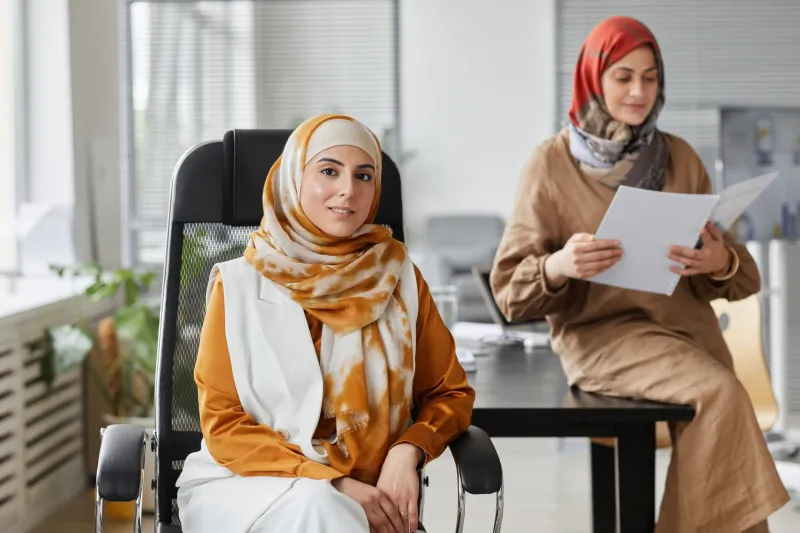
There's a moment Hana Khalil remembers clearly. She was sitting across from a venture capitalist in a glass-walled conference room in San Francisco, pitching her halal-certified skincare line. The investor leaned back, tilted his head, and asked the question she'd been dreading: "Can you scale this without... relaxing some of the standards?"
She said no. She got the funding anyway.
"That moment told me everything," says Khalil, whose brand now ships to customers in 34 states. "When you're clear about your values, people respect it — even if they don't fully understand it."
Khalil is part of a growing wave of Muslim entrepreneurs in America who are doing something that used to seem almost contradictory: building highly competitive, commercially successful businesses while holding firm to Islamic principles. No interest-based financing. No misleading marketing. Ethical supply chains. Transparent pricing. And yes, starting every major decision with a quiet bismillah — in the name of God.
The result? Companies that are drawing attention not just from Muslim consumers, but from mainstream investors and business press who are starting to notice that values-forward businesses are performing.
What Does Faith-Forward Business Actually Look Like?
It's easy to assume that running a business according to Islamic ethics means adding a halal certification sticker and calling it a day. But founders in this space will tell you it goes much deeper than that.
Take the question of financing. Conventional business loans carry interest — riba — which is prohibited in Islam. For years, Muslim entrepreneurs either had to compromise or self-fund, limiting how fast they could grow. But a new generation of Islamic fintech companies is changing that calculus. Platforms offering murabaha (cost-plus financing) and musharaka (profit-sharing partnerships) structures are giving Muslim-owned businesses access to growth capital that doesn't require them to violate their convictions.
Omar Shaikh, co-founder of a Chicago-based halal food distribution company, used one such platform to expand his cold-storage fleet two years ago. "I bootstrapped for six years because I didn't want to touch a conventional loan," he says. "When the right structure finally became available, we went from regional to national in eighteen months."
Beyond financing, there's the question of how you treat your workers, your suppliers, and your customers. Islamic business ethics emphasize amanah — trustworthiness — and adl — justice. In practice, that means fair wages, honest advertising, and supply chains you can actually stand behind.
The Market Is Paying Attention
Here's something the mainstream business press is slowly waking up to: the American Muslim consumer market is enormous and dramatically underserved. Estimates put Muslim purchasing power in the US at somewhere between $170 billion and $300 billion annually, depending on the methodology. And Muslim consumers, particularly younger ones, are increasingly seeking out brands that reflect their values.
"We're not a niche," says Yusra Amara, who runs a modest activewear brand out of Atlanta. "We're a market segment that has been ignored for decades. Any founder who figures out how to serve us authentically is going to do very well."
Amara's company hit seven figures in revenue in its third year. She attributes part of that success to the trust factor — Muslim consumers who find a brand they believe is genuinely aligned with their values tend to become intensely loyal.
But it's not just Muslim customers driving these brands. The broader American consumer shift toward ethical consumption — sustainability, transparency, fair trade — has created a cultural moment where faith-forward business practices resonate with a much wider audience. A company that can say it has never used deceptive marketing, never exploited its workers, and never compromised its supply chain integrity is speaking a language a lot of Americans want to hear right now.
The Challenges Are Real
None of this is easy, and it would be dishonest to pretend otherwise.
Accessing capital remains the single biggest structural barrier. Even with Islamic financing options expanding, they're still far less accessible than conventional lending. Many Muslim founders are still self-funding or relying on family networks in ways their non-Muslim peers don't have to.
There's also the question of talent. Building a company culture that reflects Islamic values — especially around gender equity, work-life balance, and prayer accommodations — requires intentional effort that takes time and resources.
And then there's the bias, subtle and sometimes not so subtle, that shows up in investor rooms and media coverage. "I've had journalists describe my company as a 'Muslim brand' in a way that clearly signals 'niche,'" says one founder who asked not to be named. "But when a company emphasizes Christian values, they call it 'values-driven.' The double standard is real."
Building for the Long Game
What strikes you when you talk to Muslim entrepreneurs across industries — food, tech, finance, fashion, wellness — is how consistently they describe their faith not as a constraint but as a competitive advantage.
The discipline of Islamic ethics, they argue, forces clarity. You can't rely on predatory pricing. You can't cut corners on quality. You can't build a culture on fear. What's left is a company that has to compete on genuine merit, genuine relationships, and genuine value.
"When you remove all the shortcuts," says Khalil, "you're left with the real work. And the real work, it turns out, is what builds something that lasts."
For a business culture that's increasingly skeptical of companies that say one thing and do another, that kind of integrity might be the most disruptive thing a founder can offer.