From Prayer Rugs to Runways: How Modest Fashion Found Its Moment in American Style
For a long time, modest dressing in America was treated like a compromise — something you did instead of being fashionable, not as a form of fashion. That narrative is falling apart fast.
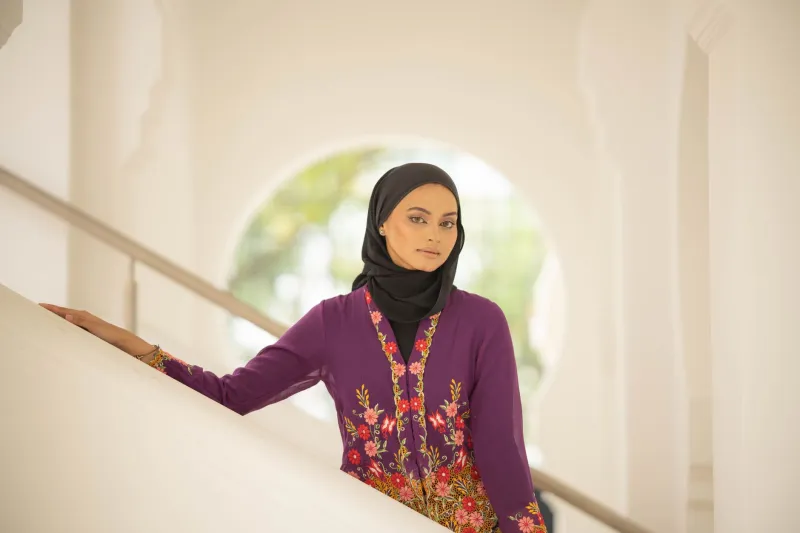
Walk through a major American city today and you'll spot it everywhere: floor-length silhouettes paired with chunky sneakers, draped hijabs styled alongside tailored blazers, flowing abayas in unexpected prints that stop people mid-scroll on Instagram. What was once dismissed as niche or ethnic or simply other has become one of the more interesting creative conversations happening in U.S. fashion right now.
And the people driving it aren't waiting for a legacy fashion house to give them a seat at the table. They're building their own.
The Market That Was Always There
Let's be honest about something: modest fashion didn't appear out of nowhere. Muslim women in America have been getting dressed every single morning for decades — navigating a market that largely ignored them, improvising, layering, and making it work anyway. The demand was never the question. The industry's willingness to show up was.
That started shifting in a visible way around the mid-2010s, when brands like DKNY and H&M began releasing Ramadan collections, and Nike dropped its Pro Hijab line in 2017. Those moves were imperfect and sometimes criticized for feeling performative, but they cracked something open. They signaled that modest wear wasn't a charity project — it was a market with real purchasing power and real aesthetic opinions.
According to a report by DinarStandard, the global modest fashion market was valued at over $280 billion, with American Muslim consumers representing a growing slice of that. Designers noticed.
The Designers Changing the Conversation
What makes the current moment different isn't just commercial interest — it's creative ambition.
Designers like Annah Hariri, based in the U.S., have built entire brands around the idea that modest wear should feel luxurious and intentional, not like an afterthought. Her collections play with structure and drape in ways that feel genuinely editorial, not like they're apologizing for the coverage they provide.
Then there's the growing contingent of non-Muslim designers who are approaching modest silhouettes not as a cultural accommodation but as a genuine aesthetic direction. Designers working out of New York and Los Angeles have talked openly about how the constraints of modest dressing — longer hemlines, looser fits, covered arms — actually push them toward more interesting construction choices. When you can't rely on skin as the focal point, the fabric, the cut, and the movement of a garment have to do more work.
That's not a limitation. That's craft.
Runways and Representation
New York Fashion Week has slowly, sometimes awkwardly, begun to reflect this shift. Modest silhouettes have appeared in mainstream collections with increasing frequency — sometimes explicitly marketed as such, sometimes just quietly present in the lineup. The difference matters: when a maxi dress or a high-neck top shows up in a collection without being labeled "modest wear," it normalizes the aesthetic rather than othering it.
But representation on the runway goes beyond silhouette. It's also about who's walking. The visibility of hijab-wearing models like Halima Aden — who became the first hijabi model to appear on the cover of Sports Illustrated Swimsuit — sent a signal to an entire generation of young Muslim women that their presence in fashion spaces wasn't conditional on assimilation. You didn't have to look a certain way to belong in those images.
Halima eventually stepped back from modeling publicly, citing conflicts between industry demands and her faith. Her departure sparked its own important conversation about what inclusion actually means — and whether the fashion world is genuinely making space for Muslim women or just borrowing their aesthetic when it's convenient.
Style as Self-Expression, Not Statement
One thing that gets lost in the broader cultural conversation about modest fashion is how personal it actually is.
For many Muslim women in America, the way they dress isn't primarily a political act or a response to the fashion industry — it's just how they move through their lives. The hijab, the modest cut, the layered look: these are expressions of identity that exist completely independent of whether Vogue decides to feature them.
What changes when fashion does catch up is access. Better fabrics. More options. Clothes that actually fit the way a covered body moves. The ability to walk into a store and find something without having to mentally reconstruct the entire outfit in your head.
Designers who understand this — who are building for these women rather than performing diversity for an audience — are the ones creating work that actually resonates within the community.
Where It Goes From Here
The honest answer is that modest fashion in America is still navigating a tension. On one side, there's genuine creative momentum, real community support, and a growing roster of talented designers who are doing serious work. On the other, there's an industry that has a long history of picking up cultural aesthetics, profiting from them briefly, and moving on.
The designers who are most thoughtful about this tend to say the same thing: the goal isn't to get modest fashion "accepted" by mainstream fashion. The goal is to build something sustainable and true that doesn't depend on mainstream validation to survive.
That's a different kind of ambition — quieter, maybe, but more durable.
And if the runways want to catch up? They know where to find us.