Steam, Scrub, Repeat: How the Ancient Hammam Is Quietly Revolutionizing American Wellness
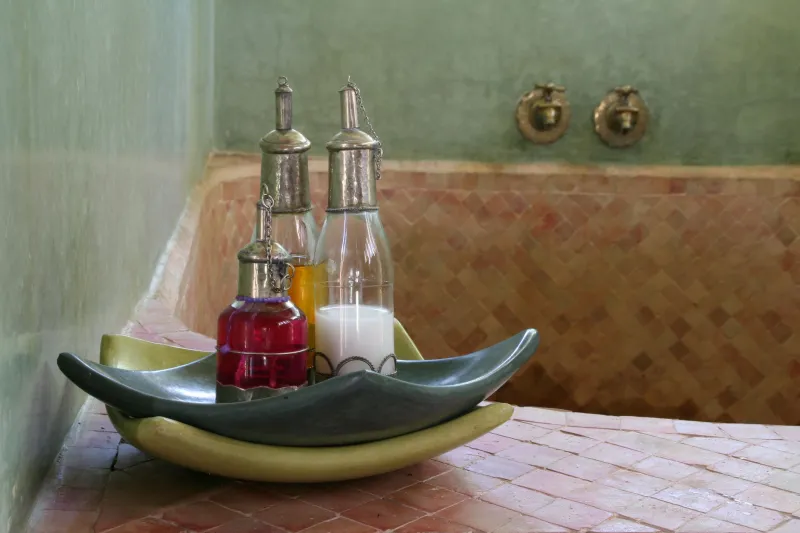
Walk into a traditional hammam and you'll notice something immediately: nobody's staring at their phone. There's no curated playlist piped through Sonos speakers. No branded robe with a monogram. What there is, though, is steam, marble, and the kind of unhurried human presence that most of us have quietly been starving for.
While American wellness culture has spent the last decade chasing the next biohack — cold therapy, red light panels, IV drips — the hammam has been sitting patiently in the background, waiting for people to catch up. And now, finally, they are.
What Is a Hammam, Actually?
The word hammam comes from the Arabic root meaning "to heat," and the practice itself stretches back more than a thousand years across the Middle East, North Africa, and Central Asia. At its core, a hammam is a communal bathhouse built around a sequence of heat rooms — typically moving from a cool anteroom to a warm middle chamber to a hot inner room — followed by an exfoliation treatment called a kessa scrub and often a full-body black soap (or beldi soap) massage.
But reducing the hammam to its physical components is like describing a Sunday dinner as just calories. The ritual has always been about more than clean skin. Historically, hammams served as gathering spaces where neighbors caught up, where women had a rare sanctuary outside the home, where community bonds were literally built into the architecture.
"In my grandmother's village in Morocco, the hammam was where you went to process life," says Nadia Benali, co-owner of Dar Safa, a traditional hammam and wellness space she opened in Chicago's Pilsen neighborhood in 2022. "Birth, grief, celebration — it all happened there. You didn't go alone. That's the part Americans are just starting to understand."
The Science Behind the Steam
Western wellness culture tends to need a clinical hook before it commits, and the hammam delivers. The combination of sustained heat exposure, vigorous exfoliation, and alternating temperatures produces measurable physiological effects that researchers have been studying more seriously in recent years.
Heat stress from steam rooms and hot chambers triggers vasodilation — the widening of blood vessels — which improves circulation and can lower blood pressure over time. A 2021 review published in the International Journal of Environmental Research and Public Health found that regular sauna and steam bathing was associated with reduced cardiovascular risk, decreased inflammation markers, and improved mood regulation through endorphin release.
The kessa scrub — traditionally done with a coarse mitt that removes dead skin cells — isn't just satisfying in the way peeling a sunburn is satisfying. It stimulates lymphatic drainage and can improve skin barrier function. Pair that with ghassoul clay or argan oil treatments common in Moroccan hammam traditions, and you've got a head-to-toe reset that no single spa product can replicate.
"People come in looking exhausted and leave looking like they slept for a week," says Youssef Khalil, a licensed massage therapist and hammam practitioner who works at a Tunisian-inspired wellness center in Brooklyn. "The body responds to this kind of heat and touch in a way that's almost primal. It's not a trend. It's just biology."
Community Spaces, Not Just Spas
The hammams opening across American cities right now are doing something different from the high-end day spas that occasionally offer a "hammam-inspired" treatment between facials. Owners like Benali are deliberately building spaces that center community alongside the wellness offering.
Dar Safa, for example, hosts women-only evenings on Thursdays that have become a gathering point for Chicago's Arab and North African diaspora. "We have grandmothers who come in and teach younger women how to do the scrub properly," Benali says, laughing. "It becomes this intergenerational thing. A teenager from Dearborn is learning hammam technique from a 70-year-old Algerian woman. Where else does that happen?"
In Los Angeles, a hammam collective in the Koreatown-adjacent neighborhood has taken a slightly different approach, partnering with local mosques and Muslim women's groups to offer private bookings on rotating schedules. In Washington, D.C., a Jordanian American entrepreneur is in the process of opening what she describes as a "neighborhood hammam" — priced intentionally lower than luxury wellness spaces to remain accessible to working-class immigrant families who grew up with this tradition.
The accessibility question matters. One of the legitimate critiques of American wellness culture is that it has a habit of extracting practices from their cultural origins, inflating the price point, and selling them back to a predominantly white, affluent consumer base while the communities who originated those practices get left behind.
When Wellness Becomes a Commodity
It would be naive to pretend that commercialization isn't happening. A quick search of Yelp or Google turns up dozens of spas across the country advertising "Moroccan hammam experiences" that bear only a passing resemblance to the real thing — a steam room here, a sugar scrub there, a vague North African aesthetic in the tile work.
"I don't get angry about it," says Khalil, though his tone suggests a complicated relationship with the word "angry." "I get frustrated when the community that created this tradition doesn't benefit from the interest in it. That's the part worth paying attention to."
For hammam owners who are part of these communities, the solution isn't to gatekeep — it's to educate. Benali has started hosting orientation sessions for first-time visitors that explain the history and cultural significance of what they're about to experience. "I want people to leave knowing this isn't just a fancy steam room," she says. "It has a name. It has a history. It belongs to a people."
Finding a Hammam Near You
If you're in a major metropolitan area, there's a decent chance a genuine hammam experience is more accessible than you'd think. Cities with significant Arab American, Moroccan American, or North African diaspora communities — Detroit, Chicago, New York, Los Angeles, Houston, D.C. — are increasingly home to spaces that offer traditional treatments.
When you're looking, pay attention to who owns the space and whether the practitioners have roots in the tradition. Ask whether the kessa scrub is done by hand with a proper mitt or replaced with a machine exfoliation. Check whether the space uses authentic beldi soap and ghassoul clay or just markets them by name while using substitutes.
And maybe most importantly: go with someone. The hammam was never meant to be a solo activity. Bring your sister, your mother, your best friend. Let the steam do its work. Leave your phone in the locker.
The hammam has been around for a thousand years. It's not going anywhere. But it's never been more ready to meet you where you are.