FaceTime, Khalati? Why Grandma's Video Calls Are Becoming America's Newest Arabic Classroom
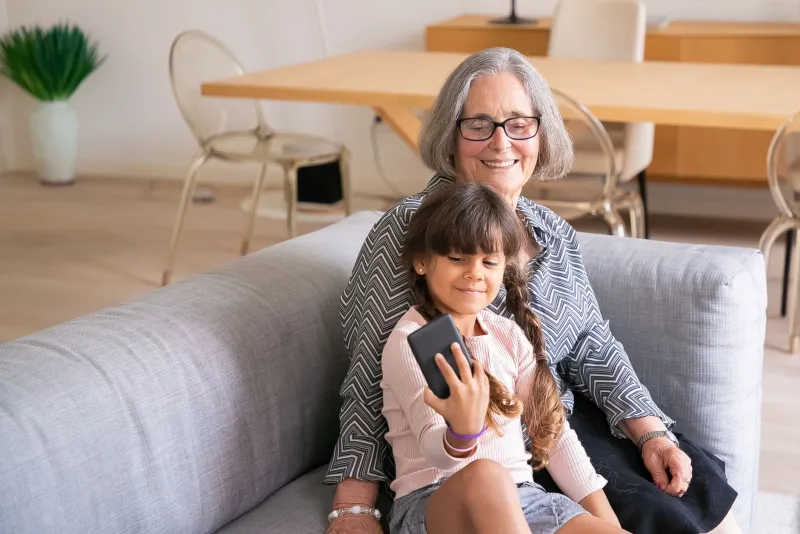
Every Sunday at 4 p.m. Eastern, six-year-old Layla parks herself in front of her mom's iPad, and for the next forty minutes, she belongs to Beirut.
Her grandmother, Teta Samira, holds the phone entirely too close to her face, which means Layla spends half the call looking up a grandmother's nostrils and the other half being drilled on vocabulary. "Shu badda bit'ooli?" — what do you want to say? Layla answers in a mix of Arabic and English that would make a linguist weep and her grandmother beam. It counts. It always counts.
This is the scene playing out in millions of American homes, and honestly, nobody planned it that way.
The Language That Almost Didn't Make It
Here's the uncomfortable truth about heritage languages in the US: the research has shown for decades that by the third generation, most immigrant languages are functionally gone. Kids understand a bit, speak less, and their kids get a handful of food words and endearments.
Arabic was headed down the same road — except something shifted. Smartphones happened. And the grandparents figured them out.
"What we're seeing now is genuinely new," says Dr. Hana Wehbe, a sociolinguist who studies heritage language retention in diaspora communities. "Historically, language transmission required proximity. You needed the grandmother in the kitchen. Now the kitchen travels. The transmission happens through a screen, and surprisingly, it works — imperfectly, but it works."
Imperfectly is doing a lot of work in that sentence. But imperfect fluency beats fluent silence, and a growing number of Arab American families are choosing the imperfect version on purpose.
WhatsApp Is the New Kitchen Table
Talk to enough Arab American parents and a pattern emerges: the grandparents aren't using apps designed for language learning. They're using the apps they already mastered for a completely different reason — guilt.
"My mom sends voice notes in Lebanese Arabic to my daughter every single morning," says Rami, a dad of two in Dearborn. "If my daughter doesn't reply with a voice note back, the follow-up messages begin. There's no curriculum. There's just a very persistent eighty-year-old with strong opinions about her granddaughter's pronunciation."
The voice note, it turns out, is a secret weapon. Unlike a live call, it lets a shy kid practice privately, listen back, and try again. Unlike a text, it carries the accent, the rhythm, the melody of the language — the stuff that never survives a written word.
And the group chat? That's where dialect lives. The inside jokes, the forwarded videos, the aunties arguing about the right way to make kibbeh — kids are absorbing register, humor, and family slang that no classroom teaches.
What Gets Lost in Translation (And What Doesn't)
Nobody's pretending the screen version is identical to the real thing. Linguists point out that kids raised on video-call Arabic tend to have gaps — certain verb forms, formal registers, anything requiring extended face-to-face negotiation.
But here's what they gain, according to families and researchers alike: a reason to use the language that isn't homework. The Arabic of the video call isn't academic. It's emotional. It's how you tell Teta you love her. It's how you ask about the olive trees. Motivation, language educators will tell you, beats instruction almost every time.
Layla, for her part, has started something new: she teaches her grandmother English slang in exchange for Arabic words. Last week's trade was "rizz" for "khteereh." Both sides believe they got the better deal.
The Long Game
Ask the grandparents what they're really doing, and none of them say "language preservation." They say things like "I don't want her to feel like a stranger when she visits" or "someone should know who the family is."
The language is the vehicle. The destination is belonging.
So the Sunday calls continue. The voice notes pile up. The group chat stays loud. And somewhere between a grandmother's too-close camera angle and a six-year-old's mangled pronunciation, a language that was supposed to fade is getting a second life — forty minutes at a time, one voice memo at a time, nostrils and all.